The South Carolina Department of Education is dedicated to leading educational reform and improvement in the state’s 85 school districts and 1,100 public schools. Under the supervision of the State Superintendent of Education, the Department provides expertise in research-based teaching and learning and also serves as the state’s leading advocate for policies promoting school improvement.
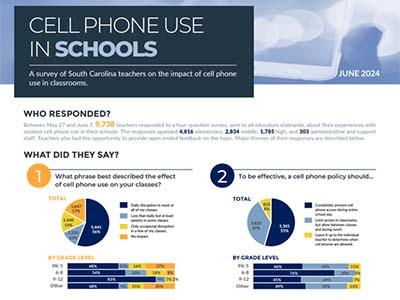
The information sheet Cell Phone Use in Schools shares the results of a survey of South Carolina teachers on the impact of cell phone use in classrooms. Between May 27 and June 7, 2024, 9,738 teachers responded to a four-question survey, sent to all educators statewide, about their experiences with student cell phone use in their schools. The responses spanned 4,816 elementary, 2,834 middle, 1,785 high, and 303 administrative and support staff. Teachers also had the opportunity to provide open-ended feedback on the topic which was synthesized into major themes. The informational value of this publication makes it our choice for the December 2024 featured state publication.
The complete list of December electronic South Carolina state publications is available. The South Carolina Digital State Documents Depository provides electronic access to state agency publications. These publications provide citizens with crucial information about state government and include statistics, reports, and data on a wide variety of topics related to the state.
For more information about our depository for state publications, visit our online guide.