State Documents for Black History Month

The story of the American Revolution in South Carolina cannot be told without including the role of African Americans.

Enslaved African Americans worked, fought, and died for their own freedom and for the independence of our nation. Learn about how Black history and culture continue to shape the Palmetto State with these items from the South Carolina State Documents Collection.

State Documents

Cover of South Carolina’s Blacks and Native Americans, 1776-1976.

South Carolina’s Blacks and Native Americans, 1776-1976

South Carolina Human Affairs Commission

Published in 1976, when the United States celebrated its 200th birthday, this book explores the history of African Americans and Native Americans in the Palmetto State. When it was published, this book was a pioneering effort to highlight the history of African Americans and Native Americans from the birth of the country to the present.

View in Catalog

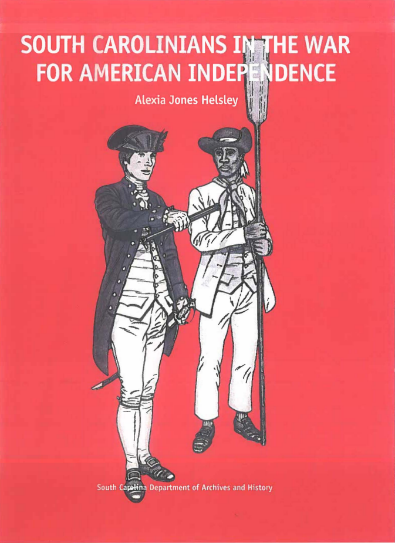
Cover of South Carolinians in the War for American Independence.

South Carolinians in the War for American Independence

Alexia Jones Helsley; South Carolina Department of Archives and History

This book contains a sample of petitions and accounts of Revolutionary War soldiers and Patriots, including two free African American men, John Chavis and John Featherston. Learn more about their lives and the battle for recognition of their service by reading South Carolinians in the War for American Independence.

View in Catalog

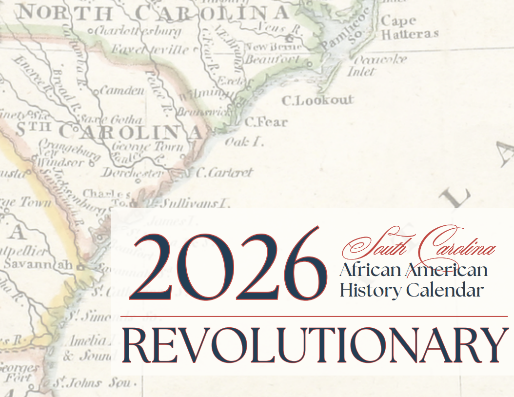
Cover of 2026 South Carolina African American History Calendar

2026 South Carolina African American History Calendar

South Carolina Department of Education

As our nation marks the 250th anniversary of the American Revolution, South Carolina stands at the center of that commemoration, not just in geography, but in spirit. This year’s South Carolina African American History Calendar invites us to witness how African Americans have embodied those virtues etched into our Constitution and brought them to life right here in South Carolina. These stories honor those who were revolutionary in both action and belief: Palmetto State citizens who boldly insisted that “We the People” must mean all the people.

View in Catalog

Cover of Touring the SC African American Trail of Charleston, Colleton and Dorchester Counties.

Touring the SC African American Trail of Charleston, Colleton and Dorchester Counties

South Carolina National Heritage Corridor

The purpose of this guide is to familiarize the visitor with the wealth of African and African American sites in three counties in the South Carolina Lowcountry. Two trails traverse the area and offer fascinating sites, towns, and communities that highlight the folkways, lifeways, culture, and achievements of enslaved Africans and African Americans in Charleston, Dorchester, and Colleton Counties.

View in Catalog

Cover of African American Genealogical Research.

African American Genealogical Research

South Carolina Department Archives and History

South Carolina, one of the 13 original colonies, possesses a rich heritage of African American history. Because Charleston was a major port for the importation of enslaved Africans, South Carolina’s records are a significant source for African American genealogical research. This guide provides valuable resources for researchers in this field.

View in Catalog

Cover of African-Americans and the Palmetto State.

African-Americans and the Palmetto State

South Carolina Department of Education

This book attempts to fill a gap in South Carolina social studies texts by sharing the contributions African Americans made to the history and culture of the state. This document also highlights the individual Black South Carolinians who have left an important legacy on the Palmetto State. 

View in Catalog

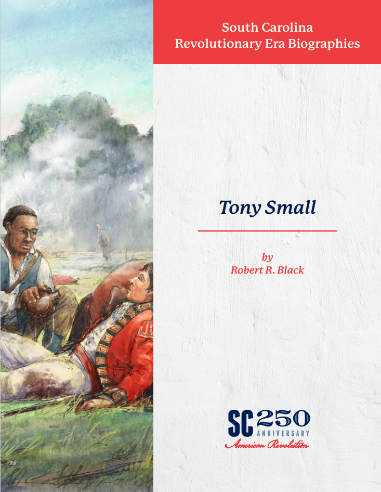
Cover of South Carolina Revolutionary Era Biographies – Tony Small.

South Carolina Revolutionary Era Biographies – Tony Small

South Carolina Sestercentennial Commission

Irish Lord Edward Fitzgerald arrived in Charleston with the 19th Regiment of Foot on June 3, 1781. A Black man named Tony Small, who may have lived on the McKelvey Plantation at Eutaw Springs, saved his life after Fitzgerald was wounded at the Battle of Eutaw Springs on September 8, 1781. Fitzgerald hired Small as his servant, taking him back to Europe. Inspired in part by Tony’s accounts of African Americans in South Carolina in their struggle for freedom, Fitzgerald renounced his nobility and authority in the British Army to lead the unsuccessful United Irishmen rebellion of 1796–1798 against British rule in Ireland. Learn more about the lives of Tony Small and Lord Edward Fitzgerald in this publication from the South Carolina Sestercentennial Commission.

View in Catalog

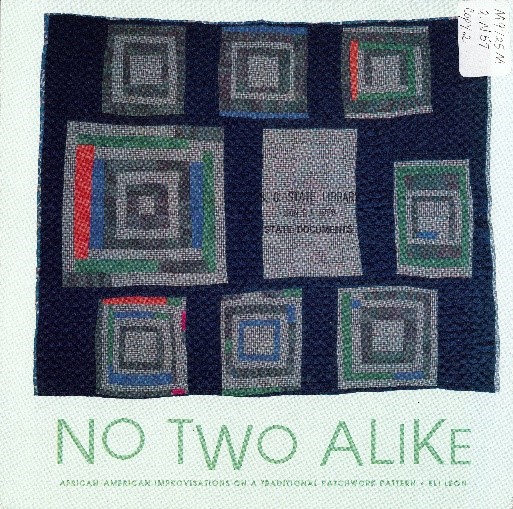
Cover of No Two Alike: African-American Improvisations on a Traditional Patchwork Pattern.

No Two Alike: African-American Improvisations on a Traditional Patchwork Pattern

South Carolina State Museum

The artists in this catalogue, 20th-century African American quiltmakers, speak of making the quilts “something of your own” by building on the traditions of the generations that came before. Learn how these quiltmakers take traditional patterns and make them their own in No Two Alike: African-American Improvisations on a Traditional Patchwork Pattern.

View in Catalog

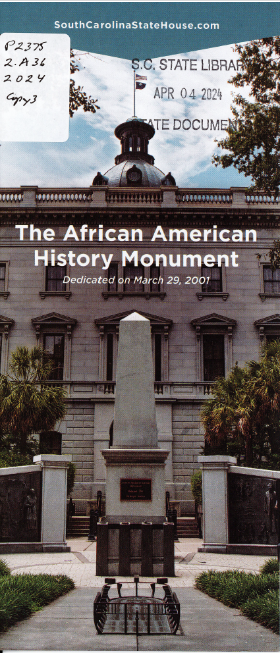
Cover of The African American History Monument.

The African American History Monument

South Carolina Department of Parks, Recreation and Tourism

The African American History Monument, the first of its kind on statehouse grounds in the United States, was designed to honor the rich history of African Americans and their contributions to the state of South Carolina. This brochure explains the elements of the monument located in Columbia.

View in Catalog

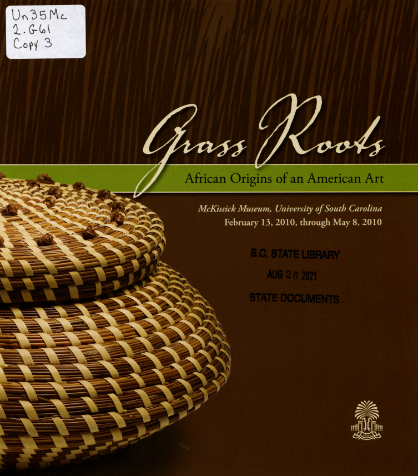
Cover of Grass Roots: African Origins of an American Art.

Grass Roots: African Origins of an American Art

University of South Carolina, McKissick Museum

The humble and beautifully crafted coiled basket was created in Africa and by Africans in the American South for as long as Africans have been on these shores. Once a common agricultural tool, a basket is also a container of memory, a repository of history, a symbol of identity, and a work of art. This guide explores the importance of this art form in South Carolina culture and history.

View in Catalog

Cover of To Walk the Whole Journey: African-American Cultural Resources in South Carolina.

To Walk the Whole Journey: African-American Cultural Resources in South Carolina

South Carolina Department of Parks, Recreation and Tourism; South Carolina State Museum

Created in response to requests from researchers and tourists, this directory features a wealth of data about the cultural heritage of African Americans in South Carolina. Cultural topics include cemeteries, colleges and universities, historic houses, museums, and religious institutions.

View in Catalog

Upcoming Event

Douglas Day Flyer.

Douglass Day 2026

February 13, 2026, 11:00 AM

Douglass Day is an annual program that marks the birth of Frederick Douglass. Each year, thousands of people gather to help create new & freely available resources for learning about Black history. Join the South Carolina State Library at the South Carolina State Museum's fourth annual celebration.

This Week