Women played a pivotal role in the American Revolution, many traveling to serve as nurses, cooks, and sometimes even soldiers.
Learn about how South Carolina women, on and off the battlefield, have become legends of the American Revolution.
Search the South Carolina State website.
SmartSearch+ searches the A-Z list of our databases and connects you to both Discus and State Library resources.
Search the shelves of 20 library systems statewide, or visit SCLENDS to browse or use the advanced search.
Women played a pivotal role in the American Revolution, many traveling to serve as nurses, cooks, and sometimes even soldiers.
Learn about how South Carolina women, on and off the battlefield, have become legends of the American Revolution.

Through their correspondence, the lives of Robert and Mary Ouldfield Heriot reveal a wealth of information about the impact of the Revolution on South Carolina families and the struggles of individuals to navigate the changes of war.
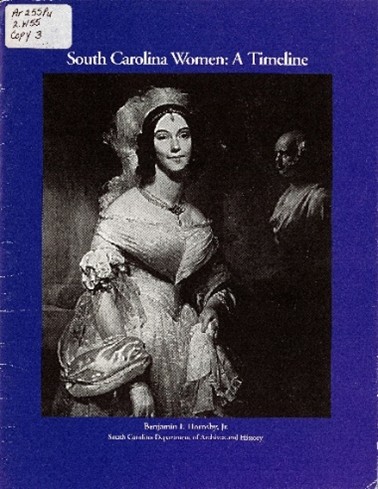
This publication gives a timeline of women in South Carolina from 1540, when the Queen of Cofitachiqui entertained Spanish conquistador Hernando DeSoto on the Wateree River, until 1995. Each page is full of well-known and lesser-known names, and it details how the achievements of South Carolina women impacted the Palmetto State.

Learn about American Patriot, Jane Black Thomas through this publication from the South Carolina American Revolution Sestercentennial Commission. In 1780, Thomas overheard a conversation between two Loyalist women about an upcoming attack on the American militia at Cedar Spring in modern-day Spartanburg County. The next morning, Thomas rode 60 miles on horseback to warn the Patriots of the attack.

This SCETV production tells the stories of South Carolinian heroes of the American Revolution: Rebecca Motte, who supplied Patriot forces with food and supplies throughout the war, and Isaac Hayne, who was executed by the British as an American rebel.

No other woman from Revolutionary-era South Carolina has achieved more recognition and fame than Dicey Langston. Laodicea “Dicey” Langston Springfield became a Revolutionary War legend by acting as a brave Patriot spy and defender even in the face of great danger. Learn more about the stories surrounding Dicey Langston’s contribution to the Revolution in the backcountry of South Carolina through this publication from the South Carolina American Revolution Sestercentennial Commission.

This resource, revised in 1997, presents four women pioneers of different ethnic backgrounds – Judith Lawson, an African American; Mary Musgrove Matthews Bosomworth of Creek and European descent; and Mary Gloud and Elizabeth Haig, both Europeans. The lives of these women in colonial South Carolina reflect the challenges posed by a fluid society and cultures in transition. They also illustrate some of the tensions felt as European, African, and Native American cultures interacted on the Carolina “frontier”- a term used loosely to denote the process of European and African settlement in a Native American environment.

Discover the story of Jane Thomas, a Patriot woman who traveled over 60 miles on horseback to warn a Patriot camp about an impending British attack.

Circle of Inheritance is a television program produced by the South Carolina Educational Television that examines the prehistoric, colonial history, and the buildup to the Revolution in South Carolina.

This booklet serves as both a viewer’s and a teacher’s guide to Circle of Inheritance, an SCETV television program that examines South Carolina’s prehistoric and colonial history and the buildup to the Revolution. The booklet discusses Eliza Lucas Pinckney, a famous colonial South Carolinian. Pinckney was a renowned agriculturist who made indigo a cash crop in colonial South Carolina. She is also the mother of two South Carolinians of Revolutionary fame: Charles Cotesworth Pinckney, a signer of the U.S. Constitution, and Thomas Pinckney, a military officer and Governor of South Carolina.

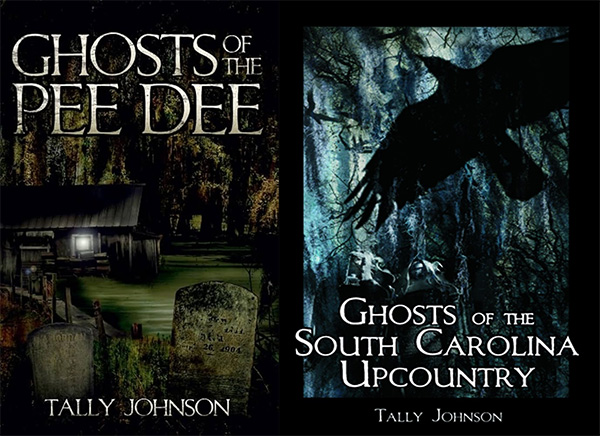
Please join us for our next Speaker at the Center talk with award-winning storyteller, author, and folklorist Tally Johnson, who will tell ghost stories from the Revolutionary War period, covering South Carolina from the mountains to the sea. You will learn some of the hidden history of the Revolution via the rich ghostlore of South Carolina, where the Revolution was won.