People across the American colonies fought in the American Revolution. In South Carolina, fighting was especially brutal, as neighbors were often pitted against one another, and skirmishes and battles broke out across the entire colony. Through the State Documents Collection, learn about the service of soldiers during the American Revolution.
State Documents for Military Appreciation Month
State Documents

Timeline of the American Revolution in South Carolina
This document highlights the history of the American Revolution with a specific focus on South Carolina from the end of the French and Indian War in 1763 to the signing of the Treaty of Paris in 1783. Key battles in South Carolina, as shown on the timeline, include the Battle of King’s Mountain, the Battle of Cowpens, and the Battle of Eutaw Springs.
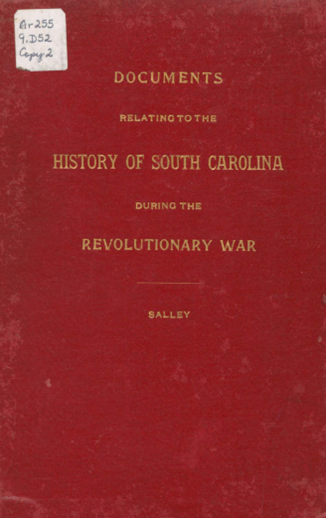
Documents Relating to the History of South Carolina During the Revolutionary War
This book includes documents that are related to the history of South Carolina during the Revolutionary War. This document was created by the Secretary of the Historical Commission of South Carolina, A. S. Salley, Jr.

Battles, skirmishes, and actions which took place in South Carolina during the American Revolution
This document includes a list of 182 separate military actions in South Carolina during the American Revolution.

John Harrison and the South Carolina Rangers
Few military units of the American Revolution have received less attention from historians than Major John Harrison’s South Carolina Rangers, a provincial regiment organized in June 1780. The handful of accounts that do mention Harrison and his troops have generally portrayed them in an unfavorable light, describing Harrison and his brothers as robbers and the Rangers as plunderers and murderers.

The Partisan War: The South Carolina Campaign of 1780-1782
This narrative produced by the South Carolina Tricentennial Commission examines the end of the Revolutionary War in South Carolina while comparing it to military events and tactics of the twentieth century such as the Vietnam War.
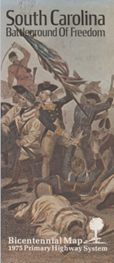
South Carolina Battleground of Freedom Bicentennial Map
This Bicentennial Map of the 1975 Primary Highway System lists 50 important sites of battles, skirmishes, and other engagements fought on South Carolina soil as a guide to history.
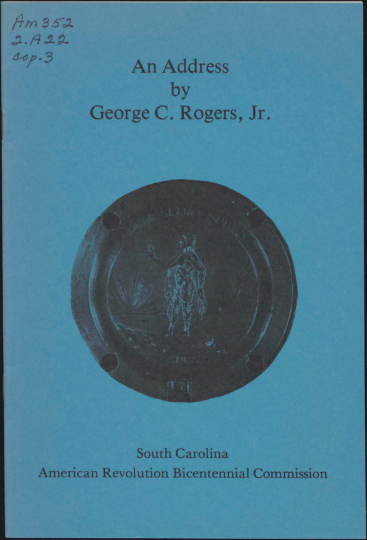
An address given by appointment of the American Revolution Bicentennial Commission on the occasion of the two hundredth anniversary of the evacuation of Charleston by the British
This address, given on December 14, 1982, tells of the evacuation of British forces from Charleston in 1782 and the state movements in history that came out of that evacuation, including a greater balance of power between the Lowcountry and the Upcountry.
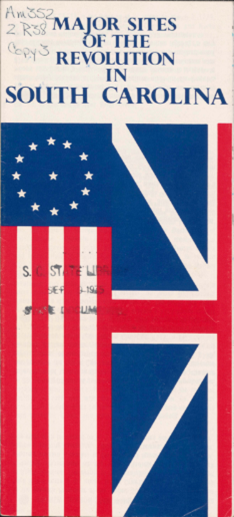
Major Sites of the Revolution in South Carolina
This brochure highlights South Carolina’s rich living history, including its historic buildings, battlefields, archaeological remains, and fortifications that offer visitors a tangible connection to America’s beginnings.

Chasing the Swamp Fox
This one-hour production provides a historical visualization of Francis Marion's partisan campaigns during the American Revolution in South Carolina. It portrays life in South Carolina during the Revolution and how Francis Marion's participation helped birth modern-day guerrilla warfare.

Betrayal at Matthews Bluff
History tells us that a man named Willie led Lieutenant Kemp’s platoon of Loyalist troops into an ambush by Patriot forces at Matthew Bluff in present-day Allendale County, South Carolina, on January 22, 1781. What would have motivated Willie to commit such a treacherous act against men entrusted to his care? Did he harbor some grievances against the Loyalists? Did he hold a genuine belief in the ideas of the Revolution? This document explores the theories of Willie’s identity and the treachery in the American Revolution.
Upcoming Event

Author Patricia Brandon and "Rise of the Pale Moon"
May 7, 2026, 5:30 PM
Join us at the next installment of the Speaker at the Center with Author Patricia Brandon where she will discuss her historical fiction novel, "Rise of the Pale Moon." Set against the backdrop of the Revolutionary War era in coastal South Carolina, Rise of the Pale Moon weaves a compelling tale of three young women from distinct backgrounds: an indentured servant from London, a chattel slave raised on the Montague Hall plantation, and a Catawba Indian captured by the Cherokee and traded into slavery.