This summer, celebrate the 250th anniversary of the American Revolution by visiting important sites of the war here in South Carolina. Learn about the many state and national parks that highlight the Revolutionary history in the Palmetto State through the South Carolina State Documents Collection.
State Documents for Great Outdoors Month
State Documents
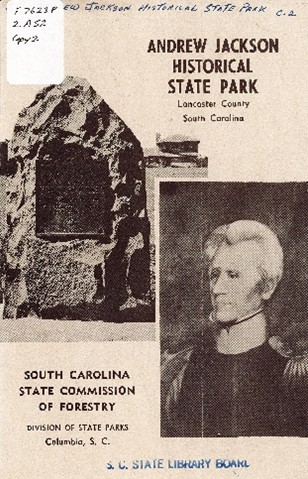
Andrew Jackson Historical State Park, Lancaster County, South Carolina
Andrew Jackson State Park combines history, art, and community activities into a setting that has made it one of the S.C. State Park Service’s most popular attractions. The only park in the system dedicated to a U.S. president, the park features a museum that details the boyhood of the nation’s seventh president during the American Revolution, who grew up in the Waxhaws region of the Carolina backcountry.

Walnut Grove: An Upcountry Plantation
In 1763, Charles and Mary Moore were granted land from King George that would eventually go on to total 3,600 acres in modern-day Spartanburg County. During the Revolutionary War, the Moores, including daughter Margaret Catherine Moore-Barry and son Thomas Moore, supported the Patriot cause. Local militia mustered at Walnut Grove prior to the Battle of Cowpens. Loyalist William “Bloody Bill” Cunningham raided the plantation in November 1781 and killed a Patriot soldier sheltered by the Moores.
Hampton Plantation State Park Visitors Guide
This booklet tells the history the French Huguenot families who settled the region of the Lowcountry surrounding Hampton Plantation State Park. Many prominent characters of the American Revolution had ties to Hampton Plantation, and today, the state park and the house on site illustrate the history of region from colonial times to the twentieth century.

The Official Guide to South Carolina State Parks
This little book is the official guide to all the South Carolina state parks. The guide includes individual information about each park, a calendar of upcoming events, camping and lodging information, outdoor activities, group gatherings and more. Grab a free copy at the South Carolina State Library today!
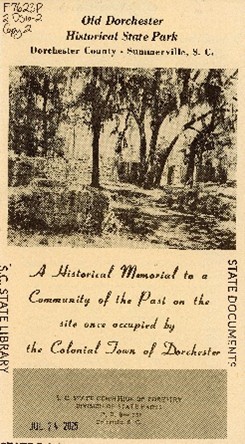
Old Dorchester Historical State Park: A Historical Memorial to a Community of the Past on the Site Once Occupied by the Colonial Town of Dorchester
From 1697 until the beginning of the Revolutionary War, the trading town of Dorchester flourished along the Ashley River, inland from colonial Charleston. Today, Colonial Dorchester State Historic Site’s remarkably preserved archaeological remains give visitors a peek into the early history of colonial South Carolina.

South Carolina's Musgrove Mill State Historic Site on the Enoree River
The Battle of Musgrove Mill took place on August 19, 1780. A small force of Carolina, Georgia, and Overmountain Man Patriot militia fought and defeated a larger force Loyalist South Carolina militia and Provincial soldiers in a short but pivotal battle. This surprising Patriot victory was a major turning point during the Revolutionary War. Today, the battle and the history of the Revolutionary War in the South Carolina Backcountry are detailed through interpretative signage in the site’s Visitor Center and along the 1-mile British Camp Trail and a 1.5-mile Battlefield Trail.
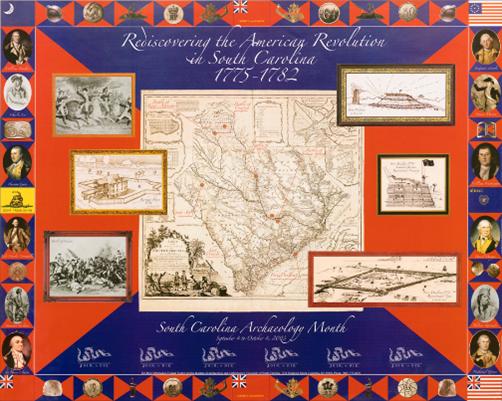
Rediscovering the American Revolution in South Carolina, 1775-1782: South Carolina Archaeology Month, September 4 to October 4, 2003
South Carolina was the site of 137 known battles and skirmishes during the American Revolution, far more than in any other state. The locations of many are preserved by the National Park Service or by the South Carolina Department of Parks, Recreation and Tourism, while others have vanished completely. Fortunately, historical and archaeological work has been done on many of these sites, providing a wealth of information about the events that occurred there. View this poster to learn more about archaeology work across important South Carolina Revolutionary War sites!

South Carolina's Landsford Canal State Park on the Catawba River
Long before Landsford Canal became known for its rare spider lilies, it was a strategic point on the Catawba River. Both Patriot and British troops crossed here en route to battle, sometimes facing off along the banks. Today, visitors can hike, paddle, and reflect on the soldiers who passed through.

Archeological Excavations at the Star Fort Ninety Six National Historic Site
In May of 2018 and 2019, the South Carolina Institute of Archaeology and Anthropology conducted two field schools at the Star Fort within Ninety Six National Historic Site. The project demonstrated that the Star Fort, despite being burned by the British and a tourist attraction for over two centuries, still retains significant archeological components, which could lead to a greater understanding of the siege and lives of Revolutionary War soldiers in the backcountry of South Carolina.
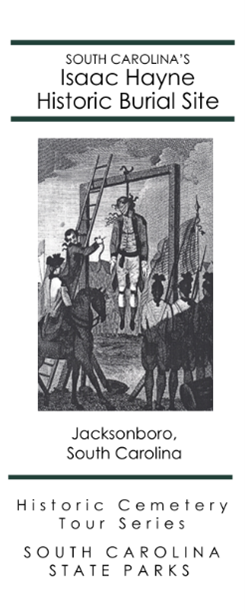
South Carolina’s Isaac Hayne Historic Burial Site
Isaac Hayne was a wealthy planter who fought for independence during the Revolution. After the British captured Charleston in May of 1780, he accepted a parole and returned to his home to live in neutrality. After continuing to fight for the Patriot cause, Hayne was captured by the British and executed in Charleston on August 4, 1781. Isaac Hayne and many of his family members were buried at his plantation, Hayne Hall, which is managed by the South Carolina State Park Service.
Upcoming Event

Speaker at the Center: Authors Charlie Mewshaw and Michael G. Williams
September 18, 2026, 6:00 PM
Join us at our next Speaker at the Center series on Friday, September 18, at 6 p.m. for an author talk featuring authors and podcast co-hosts, Charlie Mewshaw and Michael G. Williams. They will share content from Arcane Carolinas, Volume 2 and Volume 3. Charlie and Michael use library resources to explore folklore and all things eerie in the Carolinas.